






‘Tony Bloom seagulls revolution’ – Brighton Fans Could Soon Get the Tony Bloom Documentary They Have Been Waiting For.
 September 21, 2026
Brighton Fans Could Soon Get the Tony Bloom Documentary They Have Been Waiting For
Brighton & Hove Albion have undergone one of the most remarkable transformations in modern English football. Within little more than a decade, the club went from fighting for stability outside the Premier League to establishing itself in the top flight and competing in European football.
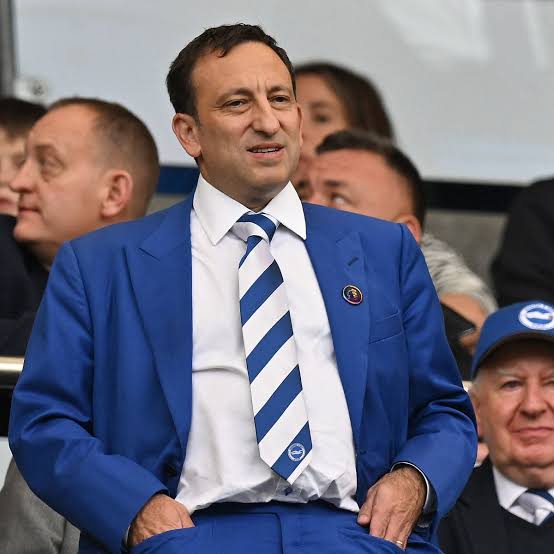
At the centre of that transformation has been owner and chairman Tony Bloom.
Now, with Bloom’s time at Brighton having already produced a remarkable collection of stories, there is growing fan interest in the idea of a documentary focusing specifically on the man behind the club’s transformation.
A potential film centred around Bloom would tell a very different story from a conventional football documentary. Rather than focusing primarily on a particular team or season, it would explore the decisions, philosophy and long-term planning that have shaped Brighton since Bloom became owner in 2009.
Tony Bloom’s Brighton Story
Bloom completed his takeover of Brighton in 2009, arriving at a club that had already experienced some of the most difficult years in its history.
The Seagulls had spent two seasons playing at Gillingham after leaving the Goldstone Ground and subsequently moved to the Withdean Stadium before eventually securing their new home at the Amex.
Bloom’s ownership coincided with the beginning of a new chapter.
The club moved into the Amex in 2011 and continued its climb through the Football League before eventually reaching the Premier League in 2017.
That promotion represented a major turning point.
Brighton were no longer simply trying to survive. They were entering the most competitive division in English football.
From Promotion to European Football
The story did not end with promotion.
Brighton established themselves in the Premier League and gradually developed a reputation for an unusual approach to recruitment, player development and football operations.
The club became increasingly associated with data-led recruitment and finding players who could develop and eventually command significant transfer fees.
The success of that model attracted attention from across English and European football.
Brighton’s rise was subsequently captured in the documentary Stand or Fall: The Remarkable Rise of Brighton & Hove Albion, which charts the club’s journey from the brink of extinction to its first European campaign.
The documentary itself describes Brighton’s history as a story of two halves, with the period under Tony Bloom forming a major part of the second half.
Bloom was also interviewed as part of the production, alongside other important figures from the club’s history.
Why a Tony Bloom Documentary Would Be Different
A documentary focused specifically on Bloom could go considerably deeper into the decisions that have shaped Brighton.
His story is unusual because his background was not that of a traditional football owner.
Bloom had already built a career in gambling and poker before becoming involved in football. He was a lifelong Brighton supporter and eventually became the club’s owner and chairman.
His approach to running Brighton has frequently been associated with long-term planning, analytics and recruitment.
In a 2025 interview with BBC Radio Sussex, Bloom discussed the need for Brighton to continue innovating because of the increasingly competitive nature of the Premier League. He also discussed the importance of analytics within the club’s recruitment process.
Those ideas could provide the foundation for a documentary that goes behind the scenes of how Brighton operate.
The People Behind the Project
A film about Bloom would also inevitably involve the people who have worked alongside him.
Chief executive Paul Barber has been one of the most important figures during Bloom’s ownership. Barber joined Brighton in 2012, and has spoken publicly about his relationship with Bloom and the trust between the two men.
The club’s recruitment staff, coaches, players and former executives could all provide different perspectives on the transformation.
Former managers would also form an important part of the story.
Chris Hughton guided Brighton to the Premier League, while Graham Potter subsequently helped establish the club’s reputation for an attractive, possession-based style before leaving for Chelsea.
Roberto De Zerbi then took Brighton into Europe for the first time.
Each manager represents a different chapter in the club’s development.
More Than Just Money
One of the central themes of any Tony Bloom documentary would likely be the argument that Brighton’s success cannot simply be explained by financial investment.
Bloom has invested heavily in the club, but Brighton’s rise has also involved infrastructure, recruitment, coaching, academy development and long-term planning.
The club’s own documentary producer Matt Lorenzo previously described Bloom as someone who transformed Brighton not only through his financial backing but also through his vision for the football club.
That combination is arguably what makes the story so interesting.
Brighton did not simply spend their way into becoming an established Premier League club. They developed an organisational model around recruitment and player development that became one of the most discussed approaches in English football.
What Would the Documentary Cover?
A full-length documentary could potentially take supporters through the entire Bloom era.
It could begin with his arrival in 2009 and the club’s move into the Amex.
It could then follow the promotion campaign of 2016–17, Brighton’s first years in the Premier League, the development of the club’s recruitment model and the managerial changes that followed.
The story could eventually reach Brighton’s qualification for European football and the club’s emergence as an established Premier League side.
There would also be plenty of personal material.
Bloom is a lifelong Brighton supporter, meaning the story is not simply that of an investor buying a football club. It is also the story of a supporter eventually becoming the person responsible for running the club he grew up supporting.
Brighton Already Have the Beginning of the Story
Interestingly, the idea of a documentary centred around Bloom would not come completely out of nowhere.
Brighton have already produced documentaries featuring Bloom.
We’re On Our Way chronicled the club’s 2016–17 promotion campaign and included Bloom alongside Chris Hughton, Anthony Knockaert, Glenn Murray and other figures from that historic season.
More recently, Stand or Fall: The Remarkable Rise of Brighton & Hove Albion looked at the club’s wider transformation and included interviews with Bloom and other key figures.
However, neither film is exclusively a Tony Bloom biography.
A documentary dedicated to Bloom would therefore tell the story from a much more personal perspective.
The Story Brighton Fans Would Want to See
For Brighton supporters, the most fascinating part would probably be seeing what happens behind the scenes.
How does Bloom make major football decisions?
How involved is he in recruitment?
What does he look for in a manager?
How did the club develop its data-driven approach?
And perhaps most importantly, how did a club that was once fighting for survival become an established Premier League organisation?
Those are the questions that could turn a conventional football documentary into a much broader story about how modern football clubs are built.
A Documentary Waiting to Be Made?
There is currently no confirmed Netflix announcement for a Tony Bloom documentary, so any claims of a specific Netflix release date should be treated as speculation rather than confirmed news.
But the ingredients for the story are already there.
A club that came close to disappearing.
A lifelong supporter who became its owner.
The opening of the Amex.
Promotion to the Premier League.
The development of an innovative recruitment model.
European football.
And a football club that has undergone a transformation few Brighton supporters could have imagined when Bloom first took control.
The story of Brighton’s rise has already been documented.
Perhaps the next chapter could be the story of the man who helped make it happen.