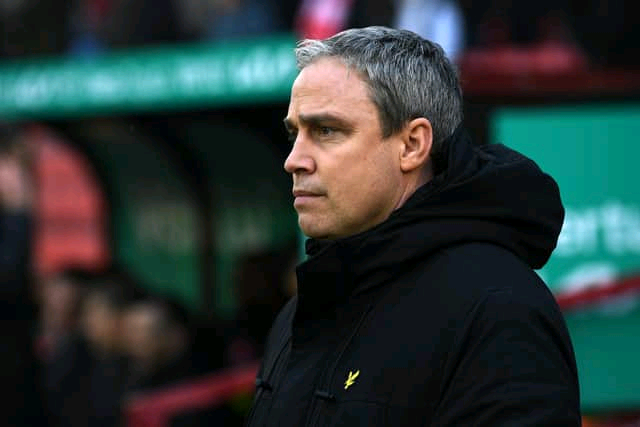
Michael Duff Could Transform Bradford City’s Winning Formula, but Only Through Careful and Gradual Changes
Michael Duff has largely been regarded as a manager who would maintain the stability and continuity already established at Bradford City. However, while he intends to preserve the strong foundations laid by his predecessor, Graham Alexander, Duff is also willing to introduce tactical changes, particularly in the team’s attacking approach. Nevertheless, he believes such adjustments must be implemented gradually rather than through sudden and drastic alterations.
Duff was appointed with the expectation that his arrival would not significantly disrupt the team’s existing structure, especially given his previous association with Burnley as a former teammate. Despite this, he has his own tactical ideas and is determined to improve Bradford City’s attacking effectiveness in their pursuit of promotion from League One. His main objective is to help the team score more goals without compromising the defensive organisation and competitive identity that have contributed to their success.
Explaining his decision to retain the same starting team and squad for Bradford City’s 0-0 home draw against Leyton Orient on Saturday, Duff emphasised that the club was already in a relatively strong position. He explained that there was no immediate need to make sweeping changes simply because a new manager had taken charge. Instead, he believes that introducing new ideas gradually will allow the players to adjust more comfortably while preserving the team’s current strengths.
According to Duff, there are several aspects of Bradford City’s performance that he would like to improve, but he is determined to introduce these adjustments carefully. He believes that making too many changes at once would be counterproductive and could undermine the progress already achieved. Rather than completely overhauling the team’s playing style, he intends to introduce new tactical concepts in manageable stages.
The Bradford City manager also explained that tactical development does not always require a complete change of formation. In many cases, a small adjustment to a player’s positioning, perhaps moving them five yards forward or backward, can significantly influence how the team performs. Duff therefore believes that tactical flexibility and a better understanding of individual roles can be just as important as changing the formation itself.
One area that appears unlikely to change significantly is Bradford City’s defensive structure. Duff confirmed that the team would continue playing with three central defenders, explaining that the club’s recruitment strategy has been built around this system. The arrangement has helped establish a solid defensive foundation, and he sees no reason to abandon it. Bradford also possess two talented attacking wing-backs, Josh Neufville and Tyreik Wright, whose ability to contribute in forward areas is an important part of the team’s tactical approach. Unfortunately, both players are currently unavailable because of injuries, limiting Duff’s options in those positions.
However, the manager is considering several possibilities concerning the team’s attacking structure. He is assessing whether Bradford should operate with one striker supported by two attacking players, or with two forwards positioned behind or alongside a more advanced striker. He is also exploring whether using two box-to-box midfielders alongside two forwards could provide a more effective attacking balance. For now, his priority is to identify the arrangements that best suit the players available to him before introducing further tactical adjustments.
Bradford City currently possess the best defensive record in the Football League, demonstrating how effective their organisation has been without the ball. Nevertheless, their attacking statistics reveal a different problem: only three teams in League One have scored fewer goals. This contrast highlights the challenge facing Duff as he attempts to improve the team’s attacking output without weakening its defensive resilience.
Reflecting on the draw against Leyton Orient, Duff admitted that Bradford City had failed to create enough meaningful scoring opportunities. Although Adam Phillips struck the crossbar with a promising effort, the manager acknowledged that relying on a single chance to determine the outcome of a match would not necessarily address the team’s underlying problems. He had also been informed, after watching the club’s previous matches, that similar opportunities might have resulted in goals on other occasions. Had Phillips’s effort gone in, Bradford could have secured a 1-0 victory, potentially making some of the team’s weaknesses less noticeable.
For Duff, the important question is not simply whether Bradford can win matches, but whether they can create better opportunities consistently. He wants the team to move the ball into more dangerous attacking areas while retaining the defensive discipline, physical strength and collective identity that have made them difficult opponents. His challenge is to establish a system that allows the players to become more productive in possession without losing the qualities that have helped them compete successfully.
Duff revealed that the coaching staff had spent several days working on a particular tactical improvement and had explained to the players why the proposed change was necessary. This suggests that the manager is already beginning to introduce his ideas, even though he does not intend to make an immediate and extensive overhaul of the team’s playing style.
He also believes that Bradford City’s strongest quality is their shared identity. The players understand what the team represents, and Duff sees this collective understanding as an important advantage. At the beginning of his tenure, he asked the players to complete an anonymous questionnaire to gain insight into their opinions, experiences and expectations. He believes that the responses helped him understand the squad better and identify one of the team’s most valuable strengths.
However, Duff recognises that maintaining this identity requires more than simply preserving the existing formation. It also depends on building trust and establishing strong relationships with the players. He explained that understanding footballers involves learning about their personalities, motivations, preferences and the factors that influence how they respond to different training methods and tactical instructions. Since the background work conducted by the coaching staff will inevitably differ from what the players were previously accustomed to, effective communication will be essential throughout the transition.
The manager stressed that trust cannot be established immediately. Using a comparison with personal relationships, he explained that people do not develop complete trust in one another after a single meeting; instead, confidence grows through experience and consistent interaction. Footballers are no different, and Duff understands that the players will initially assess him to determine whether his methods can help them improve and achieve their ambitions.
He acknowledged that it is easy for a manager to demand more goals, additional chances and more frequent victories by one or two goals. The real difficulty lies in finding a practical solution that suits the players’ abilities while still allowing the manager to establish his own philosophy. Duff therefore wants to strike a balance between recognising what the squad does well and making the changes he believes are necessary for the team to progress. He is willing to listen to the players, but he also understands that successful management requires him to make independent decisions rather than simply accommodate every preference.
Duff also highlighted the importance of Mark Trueman and Colin Doyle, two members of the existing coaching staff whom he inherited upon arriving at Bradford City. Alongside his assistant, Alex Morris, they have played an important role in helping him understand the squad and develop relationships with the players.
Duff explained that one of his first priorities after arriving in the area on Monday evening was to spend several hours with Trueman at the hotel. The meeting was intended to establish a strong working relationship and give Duff an opportunity to learn more about the club. He praised Trueman for his understanding of the game, his knowledge of Bradford City’s expectations and his awareness of the qualities that have helped the team develop over the previous two or three years.
Trueman has also proved valuable as a trusted adviser, particularly when discussing the introduction of new tactical ideas. Duff revealed that they have regularly exchanged opinions and explored different possibilities, with Trueman sometimes advising that certain changes might be premature for the current squad. His familiarity with the players and the club’s circumstances allows him to provide useful guidance about the pace at which adjustments should be introduced.
Having already experienced the pressures associated with managing Bradford City, Trueman also understands the demands of the position. Duff recognises that the club’s managerial role comes with considerable expectations and pressure, making the support and experience of established staff particularly valuable as he settles into the job.
For Bradford City’s next match, a home fixture against Stevenage on Saturday, Duff is expected to select from the same available squad. This indicates that he intends to continue working with the current group while gradually implementing his ideas rather than making immediate personnel changes.
Ultimately, Duff’s approach centres on improving Bradford City’s attacking effectiveness without sacrificing their defensive strength or established team identity. The club already possesses a strong defensive foundation, but its limited goal output suggests that tactical refinements are necessary if it is to maintain its promotion challenge. By introducing changes incrementally, building trust with the players and drawing on the experience of the existing coaching staff, Duff hopes to develop a more effective attacking system while preserving the qualities that have made Bradford City a difficult team to beat.