The Seattle Seahawks have largely been praised for exercising discipline during the 2026 NFL free agency period, particularly by avoiding inflated deals for players like running back Kenneth Walker III and edge rusher Boye Mafe. However, not every move has escaped scrutiny. One signing, in particular, has drawn significant criticism: the team’s decision to hand wide receiver and return specialist Rashid Shaheed a lucrative three-year, $51 million contract.
Analysts have questioned whether Shaheed’s deal reflects his actual production on the field. Bleacher Report writer Gary Davenport included Shaheed among his list of the 10 worst free-agent signings of the 2026 offseason. His argument centers on the wide receiver’s limited offensive output during the 2025 campaign, where Shaheed managed just 15 receptions across nine games with Seattle. Although he posted an eye-catching average of over 25 yards per catch in the postseason, that figure came from only three receptions—hardly enough to justify a $17 million annual salary.
Davenport suggested that unless Shaheed’s role in the Seahawks’ offense expands dramatically in 2026, the contract will look like a clear overpayment. He even described it as an uncommon misstep by general manager John Schneider, who is otherwise regarded as a shrewd decision-maker.
This isn’t the first time the deal has been criticized. Pro Football Focus analyst Zoltán Buday also labeled it his least favorite move by Seattle this offseason. Buday pointed out that Shaheed is now among the top 30 highest-paid receivers in the league despite being used primarily in a limited, situational role. Over 12 games with Seattle, Shaheed saw more than five targets only once and recorded fewer than 30 receiving yards in five of his final six appearances—numbers that raise concerns about his offensive value relative to his salary.
Still, evaluating Shaheed solely as a receiver may not tell the full story. His real impact has often come on special teams, where he has proven to be a game-changing return specialist. One of his most memorable moments came in Week 16 against the Los Angeles Rams, when he returned a punt for a touchdown that sparked a crucial comeback victory. That play arguably helped secure Seattle’s postseason positioning. He followed it up with another electrifying touchdown on a kickoff return during the NFC Divisional Round.
Shaheed’s credentials as a returner are well established. During his time with the New Orleans Saints, he earned first-team All-Pro honors in 2023 for his special teams excellence. That pedigree suggests he remains one of the league’s most dangerous return men and could deliver similar impact plays for Seattle in the coming season.
The challenge, however, lies in balancing that special teams value with the financial commitment. Teams rarely allocate $17 million per year to a player whose primary contributions come outside the offense. For the contract to truly make sense, Shaheed will likely need to become more integrated into the Seahawks’ passing attack. With a full offseason to learn the playbook and build chemistry with his teammates, the organization may be betting on a significant expansion of his offensive role in 2026.
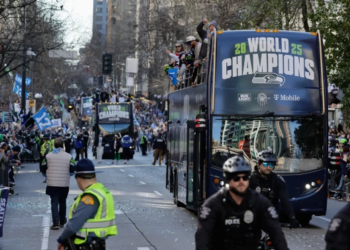
Interestingly, Shaheed is not the only Seahawks-related player to appear on lists of questionable contracts this offseason. Davenport also raised concerns about deals involving Walker and Mafe, both of whom secured major paydays following their association with a Super Bowl-winning roster. Walker, despite earning a substantial contract and even a Super Bowl MVP nod, was criticized for not yet proving he can consistently perform as a true workhorse running back. Meanwhile, Mafe’s deal has been questioned due to declining production, with just eight sacks over the past two seasons after a stronger 2023 campaign.
Altogether, these contracts highlight a broader trend: players coming off successful team achievements often command higher salaries in free agency, but those deals can quickly come under scrutiny if individual performance doesn’t match the financial investment. For Shaheed, Walker, and Mafe, the 2026 season will be crucial—not just for their teams’ success, but for validating the significant commitments made to them.