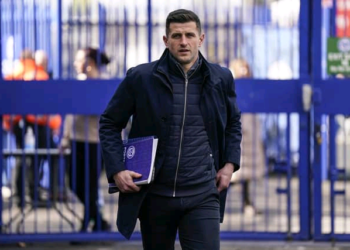
Mark Robins has made it clear that significant improvements are needed at Stoke City, particularly in terms of physical strength and competitiveness, following their disappointing 3–1 home defeat to Millwall.
The loss leaves Stoke stuck in the lower reaches of mid-table, a frustrating position as the season nears its conclusion, while Millwall continue to push strongly for automatic promotion with just days remaining. For Robins, the result was more than just another defeat—it was a stark reminder of the gaps that still exist within his squad.
Despite the negative outcome, Robins did highlight a couple of bright spots. Young defenders Pijus Otegbayo and Syd Agina, both just 18 years old, earned praise for stepping into an injury-hit backline and showing composure beyond their years. However, their efforts were overshadowed by the team’s overall lack of resilience and consistency, something Robins admitted has been an ongoing issue.
Speaking after the match, Robins did not hide his frustration. He pointed out that games like this demand grit, aggression, and the ability to win physical battles—qualities he believes his side failed to demonstrate. He expressed irritation at how often opposing teams, even those not performing at a high level, come to Stoke and leave with points. Facing a promotion-chasing Millwall side only reinforced his concerns about the team’s current standards.
He also dissected key moments that contributed to the defeat. A defensive error involving Otegbayo, compounded by poor decision-making among more experienced teammates, led to one of the goals. Another came from a mistake by goalkeeper Gavin, who mishandled a long-range effort. These lapses, Robins suggested, are indicative of a broader problem—players not taking responsibility in crucial moments.
At 2–0 down, Stoke attempted to respond by pushing forward more aggressively, abandoning their usual structured build-up play. While this shift created a few opportunities and briefly lifted the crowd—especially after pulling a goal back to make it 2–1—it ultimately wasn’t enough. Lamine managed to generate a couple of promising chances with intelligent runs, but the momentum was short-lived as Stoke conceded again through what Robins described as avoidable and poorly defended goals.
One of the manager’s biggest concerns was the attitude and effort of certain players. He criticized what he sees as a worrying trend of individuals “drifting through games” and not committing fully, particularly when the match becomes physically demanding. According to Robins, some players are simply not doing enough—failing to press, run, or compete when it matters most.
He emphasized that there is only one solution: hard work and change. The team must become stronger, more aggressive, and more consistent in duels if they are to compete effectively, especially against sides like Millwall who thrive on physicality. Robins acknowledged that this issue goes beyond just one match and has been evident for some time.
Looking ahead, he admitted that the upcoming summer transfer window and pre-season period will be crucial. With plenty of work to do, Robins is already thinking about reshaping the squad to better handle the physical demands of the league while also improving their overall style of play.
In summary, while there were minor positives in the performances of the young players, the defeat highlighted deeper structural and mental issues within the team. For Stoke City, the focus now shifts to rebuilding, with Robins determined to address these weaknesses and ensure his side is far more competitive next season.